Adventure Bike CC Requirements Explained for Riders
23 cze
Adventure Bike CC Requirements Explained for Riders
Adventure bike cc requirements refer to the official engine displacement limits that determine which adventure motorcycles riders are licensed and legally permitted to operate. Engine displacement, measured in cubic centimeters (cc), is the single most important number connecting your license category to the bikes you can legally ride. Get it wrong and you ride illegally, void your insurance, and put yourself at serious risk. This guide covers the licensing frameworks across the UK, the United States, and Japan, explains why cc size shapes your riding experience far beyond legal compliance, and helps you match the right engine to your skill level and goals.
What are the common licensing cc categories for adventure bikes?
Licensing frameworks worldwide use engine displacement as the primary threshold for sorting riders into legal categories. The rules differ by country, but the logic is consistent: bigger engines require more experience and a higher license tier.
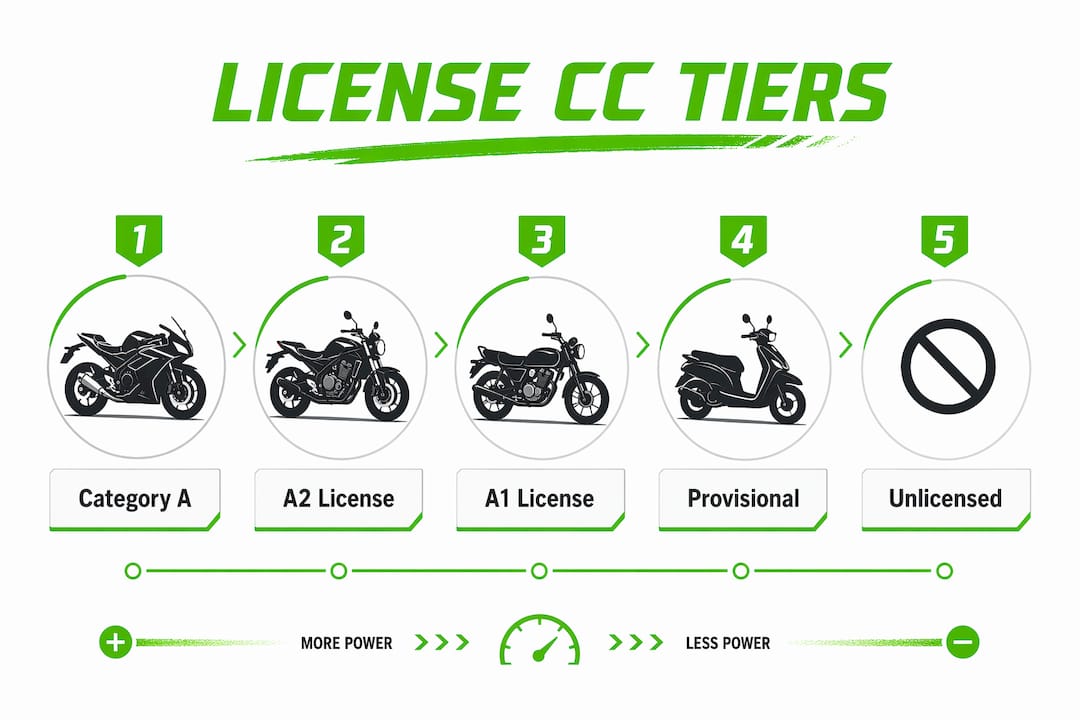
UK licensing tiers: A1, A2, and Category A
The UK operates one of the clearest tiered systems for adventure bike license requirements. UK motorcycle licenses are divided into three categories:
- A1 covers bikes up to 125cc with a maximum power output of 11kW. This tier suits commuters and new riders, not adventure touring.
- A2 permits bikes up to 35kW (47bhp). Power-to-weight ratio must not exceed 0.2kW/kg. Many mid-size adventure bikes fall within this bracket.
- Category A (full license) is unrestricted. To qualify via Direct Access, you must be at least 24 years old and train on a machine of at least 595cc and 40kW. That threshold exists because regulators recognize that full-size adventure bikes demand mature rider judgment.
The UK system matters to international riders too. Many European countries apply similar A1/A2/A frameworks under EU Directive 2006/126/EC, so your UK category often translates directly when riding in Spain, Italy, Germany, or Austria.
U.S. state variations in motorcycle cc rules
The United States has no single federal motorcycle licensing standard. Each state sets its own rules, which creates real confusion for riders crossing state lines or renting bikes abroad.
In Tennessee, a Class M license is required for any motorcycle 126cc or larger. That threshold catches nearly every adventure bike on the market. Oklahoma requires an on-cycle skills test for bikes above 300cc, meaning you cannot simply transfer a car license and hop on a 900cc GS. California mandates the California Motorcyclist Safety Program (CMSP) course for all riders under 21 as of May 2026. These variations mean you must verify your specific state’s rules before renting or purchasing an adventure bike.
Japan’s three-tier displacement classification
Japan classifies motorcycles by displacement with clean precision. Japan’s system divides bikes into three categories:
- Light class: 126cc–250cc, accessible with a Standard Motorcycle License
- Standard class: 251cc–400cc, also covered under the Standard License
- Heavy class: 401cc and above, requiring a dedicated Heavy Motorcycle License
The Heavy Motorcycle License in Japan requires a separate test and carries additional legal weight. A rider with only a Standard License cannot legally operate a BMW R1250GS or a Ducati Multistrada V4S, both of which exceed 400cc by a wide margin.
Pro Tip: Before renting or buying an adventure bike in any country, confirm the exact cc and power thresholds for your license category. A quick call to the local licensing authority takes five minutes and can save you from riding illegally.
Why does cc size matter beyond legal requirements?
Engine displacement shapes every aspect of how an adventure bike performs. Cc is not just a legal number. It determines power delivery, weight, handling, and how the bike responds when the road turns to gravel.
Smaller bikes in the 250cc–450cc range excel at technical off-road riding. They are lighter, easier to pick up after a drop, and more forgiving on tight mountain switchbacks. A 450cc single-cylinder bike can outmaneuver a 900cc twin in rocky terrain because weight and balance matter more than raw power when the trail gets technical. A 450cc single can outperform a 900cc twin off-road precisely because of this weight advantage.
Above 700cc, the calculus shifts. Long-distance highway touring with luggage, a passenger, and camping gear demands torque and sustained power delivery. Engines above 700cc handle touring loads without fatiguing the rider or straining the drivetrain. A 650cc parallel twin starts to feel underpowered when you add 40 kilograms of luggage and a pillion on a 500-kilometer day.
The Goldilocks zone: 700cc–900cc
The 700cc–900cc range is the sweet spot for multipurpose adventure riding. The Triumph Tiger 900 Rally Pro is the clearest example of this balance. It delivers enough torque for loaded highway cruising, enough agility for gravel roads, and a weight figure that does not punish you when you need to maneuver at low speed. Riders who want one bike that handles both dirt tracks and long tarmac days consistently land in this bracket.
Key trade-offs by cc range:
- 250cc–450cc: Light, maneuverable, low cost, ideal for technical off-road and beginner riders
- 500cc–650cc: Balanced for mixed riding, good fuel economy, limited under heavy load
- 700cc–900cc: Best all-around adventure performance, suits most touring scenarios
- 1000cc+: Maximum touring comfort and power, heavy, demanding at low speed and off-road
How to choose the right cc for your skill level and goals
Matching engine size to your experience is the single most important decision you make when selecting an adventure bike. Bigger is not always better. A powerful bike in the wrong hands creates danger, not excitement.
-
Start in the 250cc–400cc range if you are a beginner. Expert safety guidance ties skill development to conservative cc selections. Smaller bikes teach you throttle control, braking, and weight management without punishing mistakes as severely. The Honda CRF300L and Royal Enfield Himalayan 411 are real-world examples that deliver genuine adventure capability without overwhelming new riders.
-
Consider your primary terrain. If you plan to spend most of your time on unpaved tracks, gravel passes, or forest roads, prioritize a lighter bike over a larger engine. Off-road riding rewards agility. If your adventure is primarily long-distance highway touring through Europe, a 900cc or larger engine handles the load and distance far more comfortably.
-
Account for luggage and passenger weight. Excess weight on smaller cc bikes leads to handling problems and rider fatigue on long rides. If you plan to carry full panniers, a top case, and a passenger, a 700cc minimum is a practical floor. Underestimating load is one of the most common mistakes riders make when choosing a bike.
-
Let your license guide your progression. Licensing restrictions serve a genuine safety purpose. Licensing categories guide progression from smaller to larger cc bikes, building skills at each stage. Riders who skip this progression by jumping straight to a 1200cc bike often develop bad habits that are hard to unlearn.
Pro Tip: Rent before you buy. Riding a 650cc and a 900cc adventure bike back-to-back on similar terrain tells you more about the right fit than any spec sheet. Ride Easy offers a range of mid and large cc adventure bikes across its European bases, which makes this kind of comparison genuinely practical.
What are common misconceptions about adventure bike cc rules?
Several persistent myths lead riders into legal trouble or poor bike choices. Knowing these pitfalls protects you before you sign a rental agreement or purchase a bike.
“A restricted bike is always legal for an A2 license.” This is false. A bike eligible for A2 must not have been restricted from a more powerful original that exceeds double the A2 power limit. Riders regularly ride illegally without knowing it because they assumed a restricted bike was automatically compliant.
Common misconceptions to watch for:
- Raw cc does not equal power. A 650cc parallel twin and a 650cc single-cylinder can produce very different power outputs. License categories in the UK and EU focus on kilowatts, not cc alone. Always check both figures.
- Restriction history matters. A bike’s legal status under A2 depends on its original factory specification, not its current restricted state. Verify the bike’s full history before riding it on an A2 license.
- Regional rules do not transfer automatically. A license valid for a 400cc bike in Japan does not automatically permit the same bike in Germany. Always confirm local regulations when riding internationally.
- “Derestricted” is not a legal term. Riders often use this word casually, but the legal question is whether the bike’s original power output exceeded the permitted limit. If it did, no restriction kit makes it legal for a lower license tier.
Before renting or purchasing any adventure bike, ask for the original factory power specification in writing. Cross-reference it against your license category’s power limit. This takes minutes and eliminates the most common legal risk riders face.
Key takeaways
Adventure bike cc requirements are defined by licensing categories that set both displacement and power limits, and matching your engine size to your skill level and riding goals is as important as meeting the legal threshold.
| Point | Details |
|---|---|
| Licensing tiers set cc limits | UK A1, A2, and Category A each carry specific cc and power thresholds that determine legal bike access. |
| U.S. rules vary by state | Tennessee requires a Class M license for bikes 126cc and above; Oklahoma mandates skills tests above 300cc. |
| 700cc–900cc is the sweet spot | This range balances power, weight, and agility for most adventure riding scenarios. |
| Beginners should start at 250cc–400cc | Smaller engines build essential skills without the consequences of a high-displacement mistake. |
| Restriction history affects legality | A restricted bike is only A2-legal if its original factory output did not exceed double the A2 power limit. |
My honest take on cc requirements and adventure riding
I have watched riders make the same mistake for years: they chase the biggest engine they can legally ride and call it ambition. It is not ambition. It is impatience dressed up as enthusiasm.
The licensing progression exists for a reason. An A2 rider on a well-chosen 650cc adventure bike will develop better throttle feel, smoother braking technique, and sharper situational awareness than someone who jumps straight to a 1200cc machine and spends the first year fighting the bike instead of riding it. Skill compounds. Raw cc does not.
The most capable adventure riders I know are not riding the biggest bikes. They are riding the right bikes for the terrain and their current skill level. A 450cc off-road-focused machine in the hands of a skilled rider will cover ground that stops a 1200cc touring bike cold. That is not a knock on big bikes. It is a reminder that the engine between your ears matters more than the one under the tank.
My advice: take your licensing progression seriously, rent different cc ranges before committing to a purchase, and resist the social pressure to go big before you are ready. The mountains, the gravel passes, and the open roads across Europe will still be there when you are genuinely ready for a larger machine. They are patient. Be patient too.
— Lukasz
Ready to ride the right adventure bike for your license?
Choosing the right cc for your license and riding goals is one thing. Finding a bike that actually delivers that experience is another.
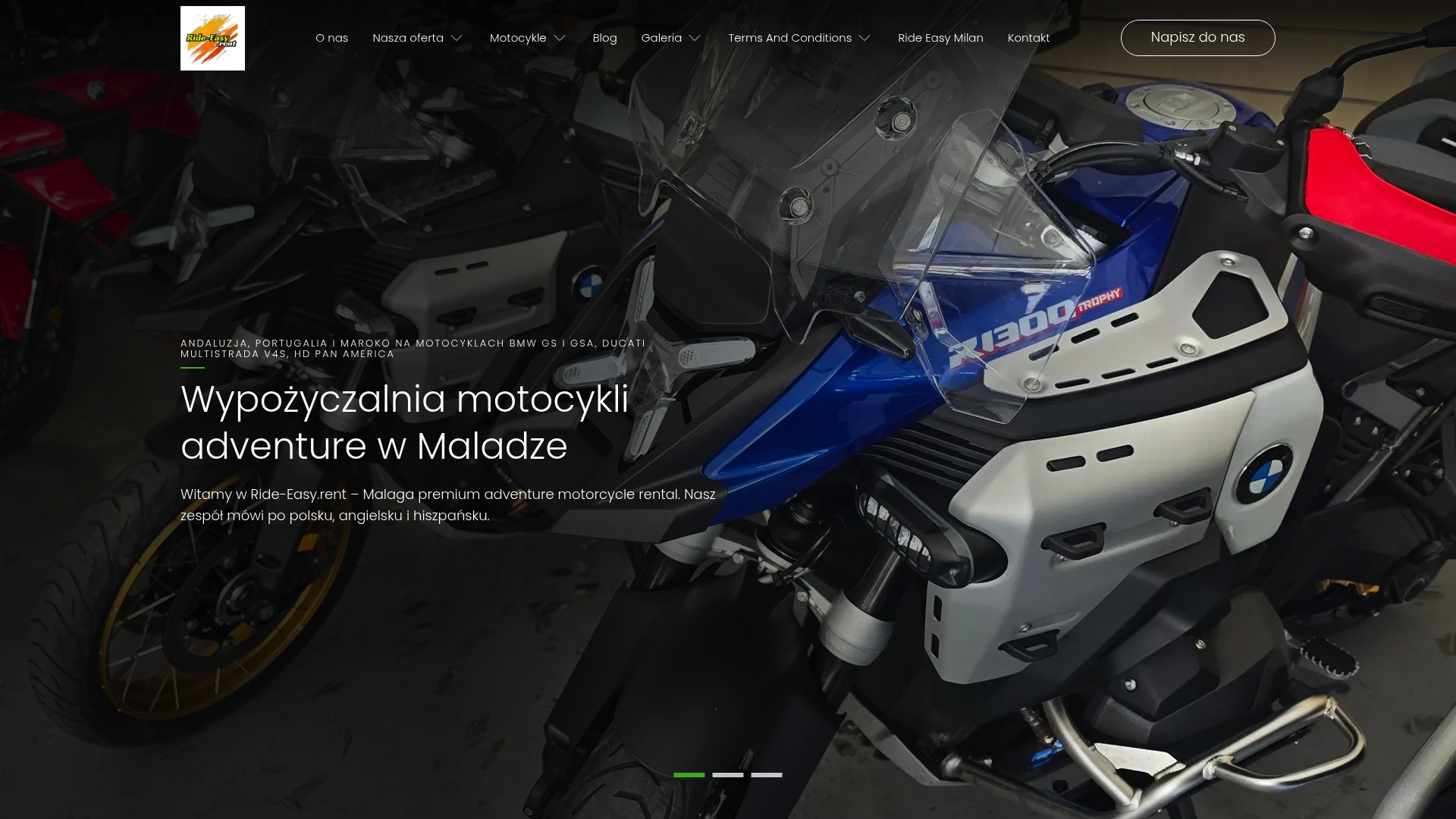
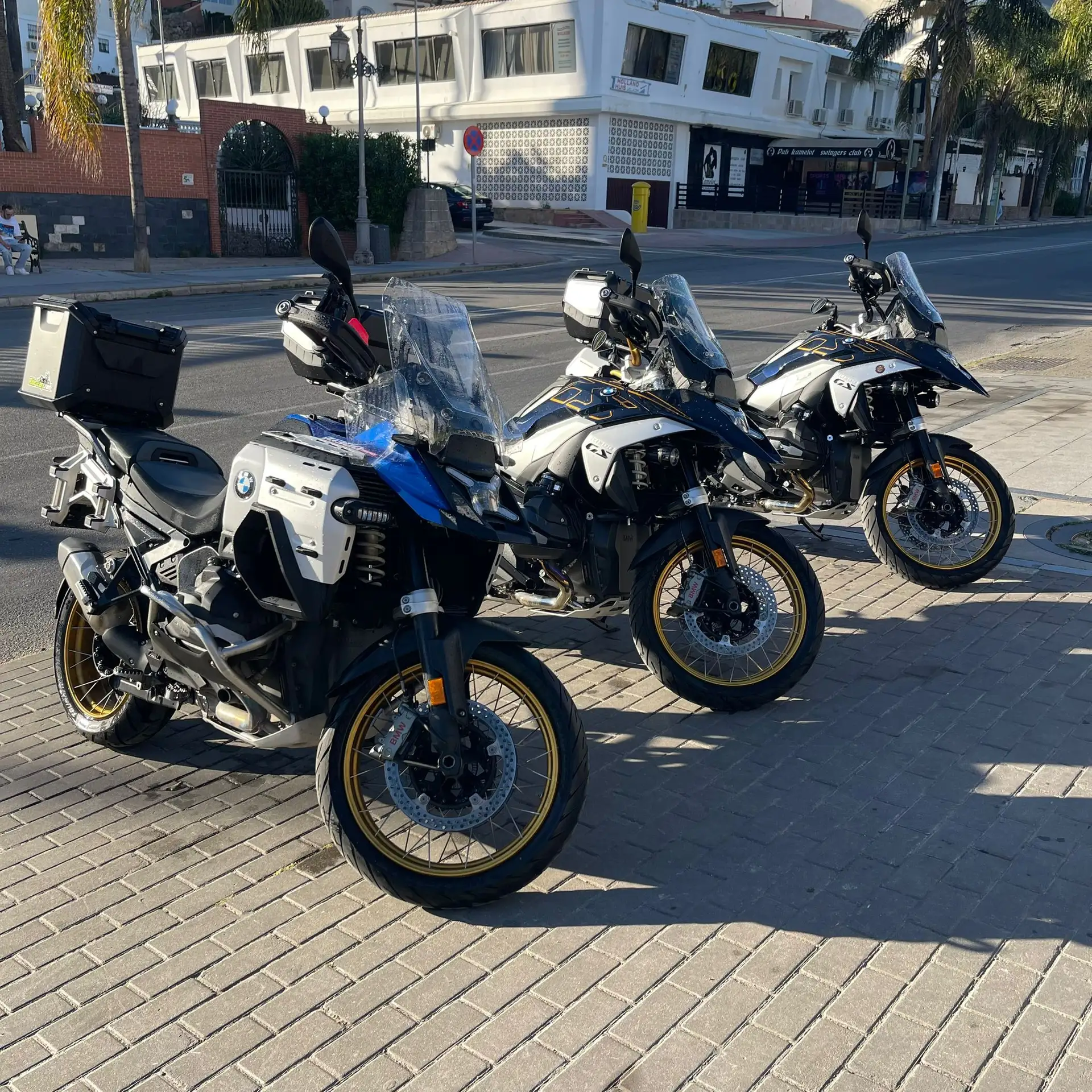
Ride Easy operates premium adventure motorcycle rentals across Spain, Italy, Germany, Austria, and Poland, with bases in Málaga (October through April) and Milan (May through October). The fleet includes mid-size and large-displacement adventure bikes suited to riders across license categories, from A2-compatible machines to full Category A flagships like the BMW R1250GS Adventure and the BMW R1300GS Adventure. Whether you want to test a 900cc bike before buying or explore Andalusia on a machine that fits your license, Ride Easy has the right bike waiting. Browse the full adventure motorcycle rental fleet and book the ride you have been planning.
FAQ
What does cc mean on an adventure bike?
CC stands for cubic centimeters and measures engine displacement, which is the total volume swept by the pistons. A higher cc generally means more power and torque, though weight and engine design also affect real-world performance.
What cc do I need for an A2 motorcycle license in the UK?
The UK A2 license permits bikes up to 35kW (47bhp) with a power-to-weight ratio no higher than 0.2kW/kg. There is no strict cc ceiling, but most A2-legal adventure bikes fall in the 500cc–650cc range.
Is a 250cc adventure bike enough for real touring?
A 250cc bike handles light touring on paved roads well, but struggles under heavy luggage loads or on sustained highway stretches. Riders planning multi-day loaded tours are better served by a 400cc minimum.
Can I ride any adventure bike with a full Category A license?
Yes. A full Category A license in the UK and most EU countries removes all displacement and power restrictions. You can legally operate any production adventure motorcycle, including 1200cc and 1300cc machines.
What is the best cc for adventure riding in Europe?
The 700cc–900cc range suits most European adventure riding scenarios, covering both mountain gravel roads and long highway days. The Triumph Tiger 900 Rally Pro is a widely cited example of this balance in practice.
Recommended
- Ride-Easy.rent | BMW R1300GS Adventure – Wypożyczalnia motocykli premium w Hiszpanii | Ride-Easy.rent
- Ride-Easy.rent | Jak przygotować motocykl do sezonu? kompletny przewodnik
- Ride-Easy.rent | Najczęstsze błędy motocyklistów i jak ich unikać
- Ride-Easy.rent | Planowanie trasy motocyklowej po Andaluzji | Najpiękniejsze drogi Hiszpanii | Ride-Easy.rent
Wypożycz motocykl i odkryj przygodę
Odkryj nasze wyjątkowe usługi motocyklowe i ciesz się podróżami w pełni. Sprawdź ofertę i dołącz do nas już dziś!
Przeglądaj inne artykuły
 23 cze
Motorcycle Road Trip Italy Planning: Your 2026 Guide
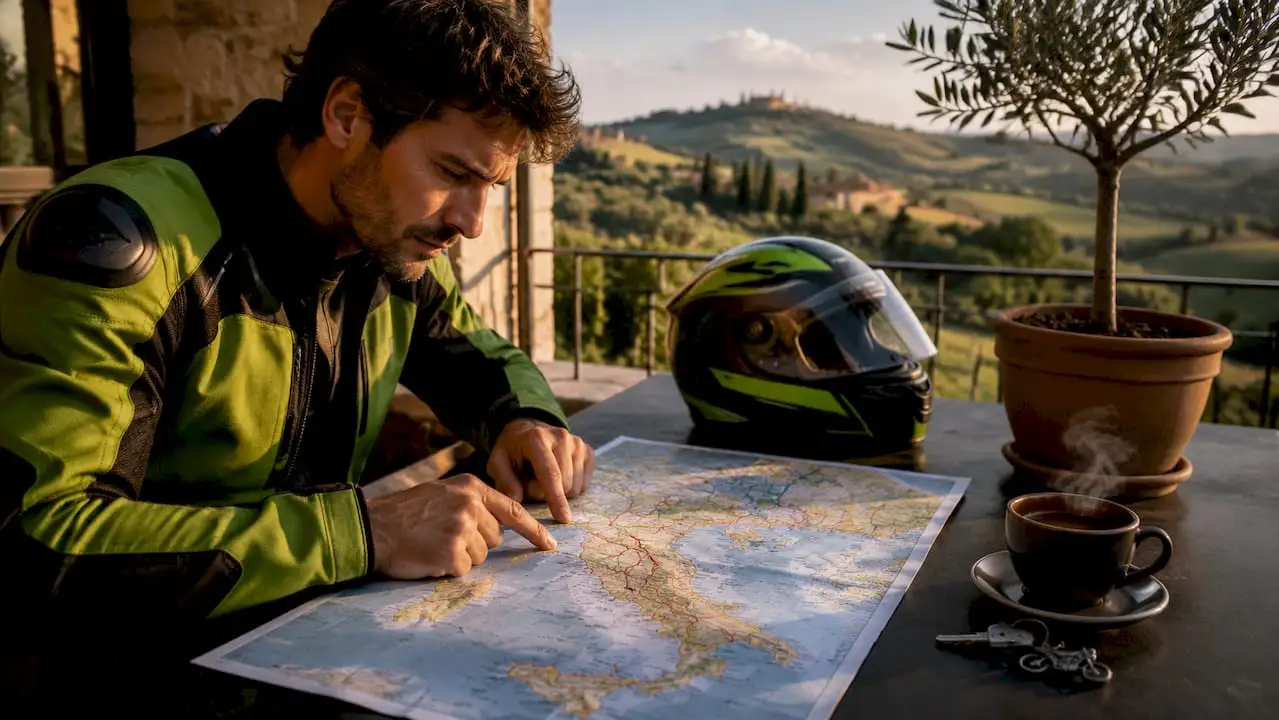
<p>Motorcycle road trip Italy planning is the process of matching the right season, legal documents, route selection, and daily logistics to produce a ride you will talk about for years. Italy is not a single riding zone. It is a country of Alpine passes, volcanic coastlines, rolling Tuscan hills, and sun-baked southern roads, each demanding a different approach. Get the timing wrong, and you face snow-blocked passes or gridlocked August highways. Get it right, and every bend reveals something worth stopping for.</p>
 17 kwi
Ride Easy na Warsaw Motorcycle Show Ptak Expo 2026 | Blog Ride Easy
 17 kwi
Motocyklem przez Andaluzję: odkryj niezwykłe trasy i tajemnice regionu
Przygotuj się na niezapomnianą podróż motocyklem przez Andaluzję! W tym wyjątkowym regionie Hiszpanii czekają na Ciebie malownicze trasy, które prowadzą przez urzekające krajobrazy, białe miasteczka i historyczne miejsca. Odkryj tajemnice Andaluzji, gdzie każdy zakręt skrywa nowe przygody. Zainspiruj się do eksploracji i zanurz się w kulturze tego niezwykłego regionu, który zachwyca każdego motocyklistę. Nie czekaj – wsiadaj na swój motocykl i ruszaj w drogę!