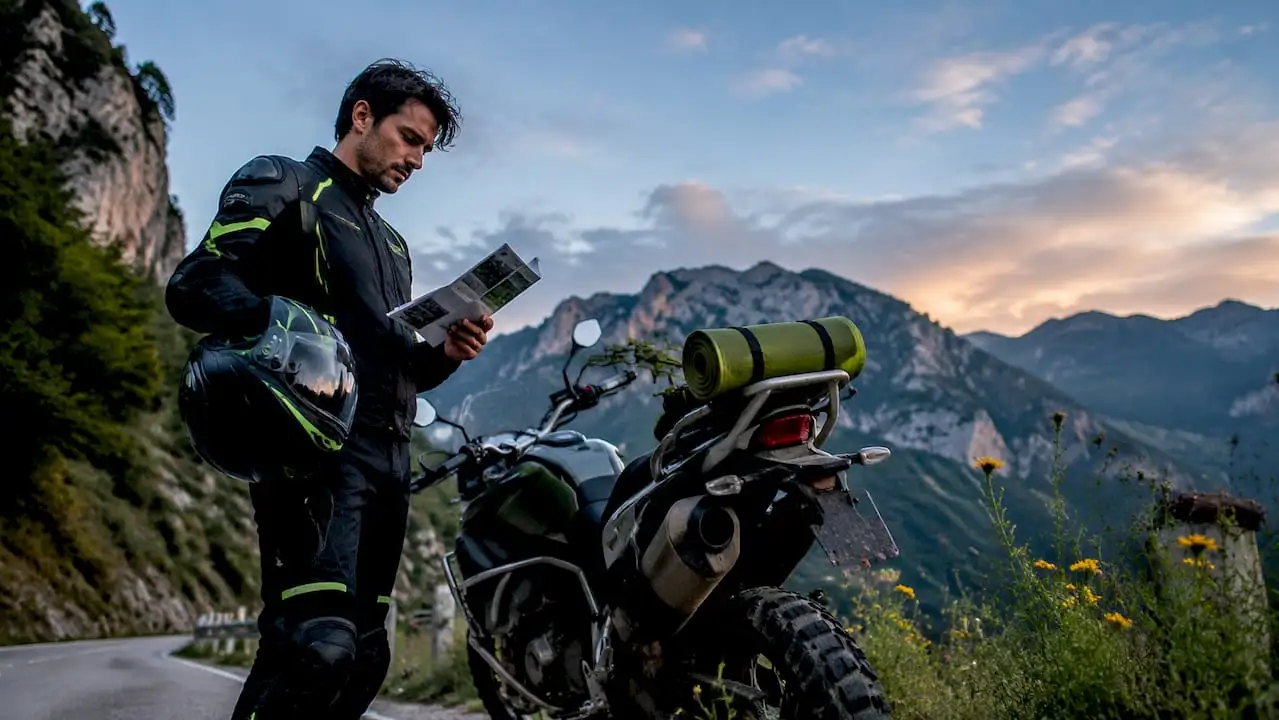
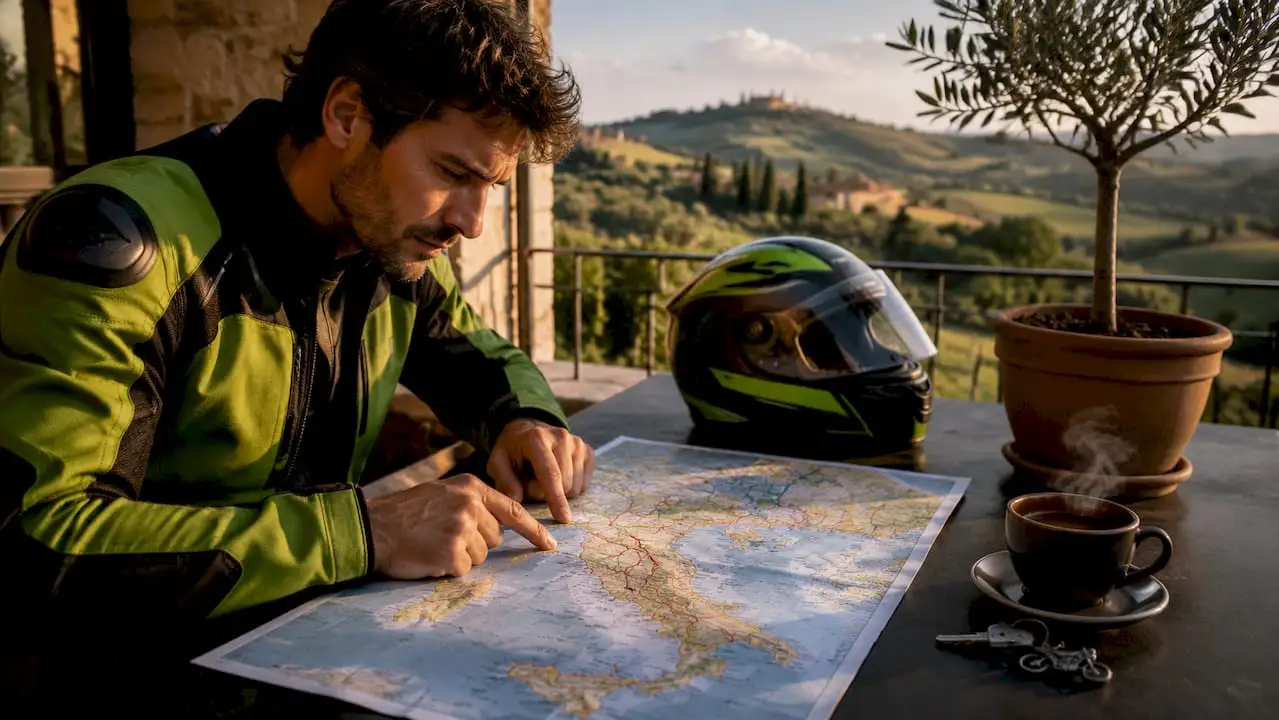
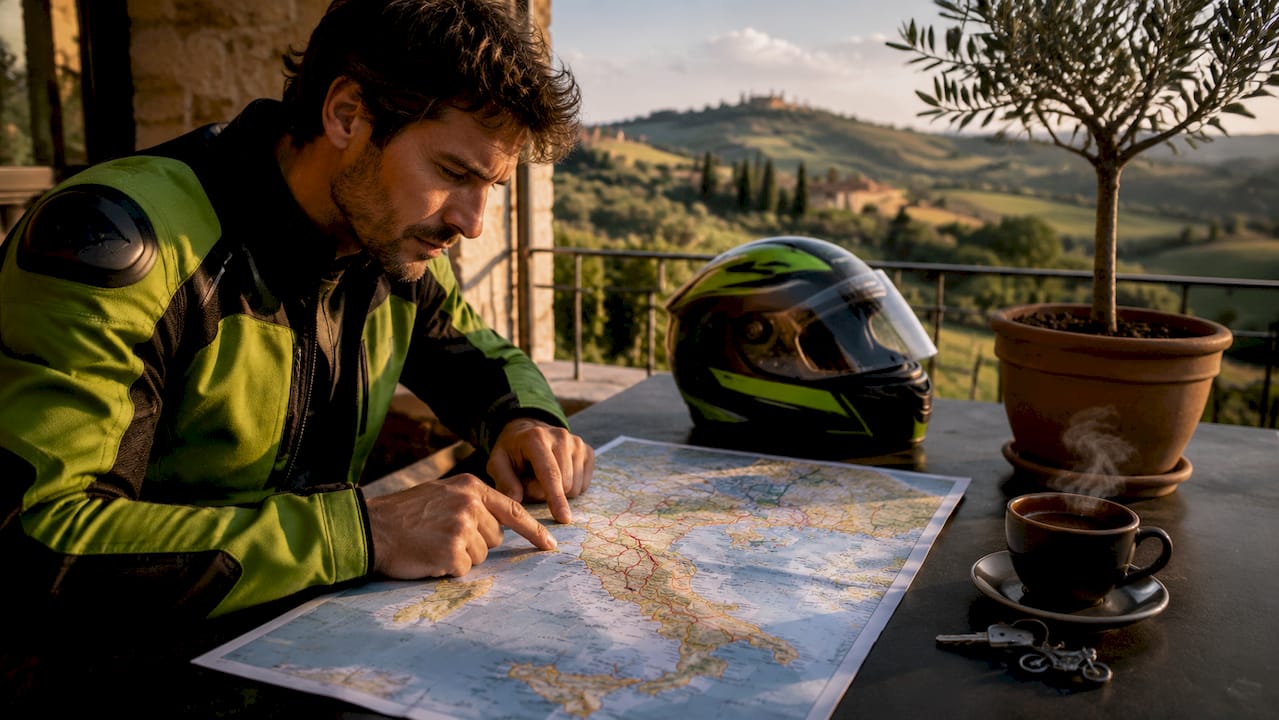
Motorcycle road trip Italy planning is the process of matching the right season, legal documents, route selection, and daily logistics to produce a ride you will talk about for years. Italy is not a single riding zone. It is a country of Alpine passes, volcanic coastlines, rolling Tuscan hills, and sun-baked southern roads, each demanding a different approach. Get the timing wrong, and you face snow-blocked passes or gridlocked August highways. Get it right, and every bend reveals something worth stopping for.
What are the best times and seasons to ride a motorcycle in Italy?
The optimal riding seasons in Italy are spring (April through June) and autumn (September through October). Those windows deliver mild temperatures, open mountain roads, and manageable traffic. Summer looks appealing on paper, but July and August bring intense heat on southern roads and tourist gridlock on the Amalfi Coast and Dolomites.
Alpine passes are a special case. Passes like Stelvio typically remain snow-covered and closed until June. Riding the Stelvio Pass in May without checking the local authority’s opening date is a mistake that costs you a full day of detours. Always verify pass conditions through the local road authority or a dedicated alpine pass website before you leave.
Regional variation is the detail most riders underestimate. The Gran Sasso massif in Abruzzo stays cold even in warm months, while the coastal roads of Sicily and Puglia can hit 35°C by mid-morning. You can experience both extremes in a single day if your route crosses altitude zones.
- Spring (April–June): Best all-round window. Passes open progressively, wildflowers line mountain roads, and crowds are thin.
- Autumn (September–October): Warm days, cooler evenings, and harvest festivals in Tuscany and Umbria add cultural depth to your ride.
- Summer (July–August): Avoid unless you are riding early mornings only and staying in the far south or Sardinia.
- Winter: Coastal Sardinia and Sicily remain rideable, but most mountain routes close.
Pro Tip: Pack a mid-layer fleece even in June. Temperature drops of 15°C between a valley floor and a 2,700-meter pass are common, and you will feel every degree.
What legal documents and insurance do you need to ride in Italy?
Every rider must carry original documents: vehicle registration, insurance certificate, and a valid driving license. Photocard licenses issued by EU countries are generally accepted without an International Driving Permit. Older paper licenses, or licenses issued outside the EU, require an IDP under the 1968 Vienna Convention. Check your specific license format before you travel.
Your travel insurance policy must explicitly cover the engine size of the bike you are riding. Many standard travel policies cap coverage at 125cc. If you are on a BMW R1300GS or a Ducati Multistrada, read the fine print carefully and upgrade your policy if needed.
Critical: ZTL zones (Limited Traffic Zones) in historic city centers are monitored by cameras that automatically identify unauthorized vehicles. Fines arrive weeks later, sometimes months after your visit, often forwarded by rental agencies. Plan to park outside city centers and walk in.
Italian traffic rules include one convention that surprises foreign riders. Traffic from the right holds priority at many roundabouts and intersections. This is the opposite of what riders from the UK, Australia, or North America expect. Treat every unmarked junction with caution until the local pattern becomes familiar.
Pro Tip: Download the ZTL zone maps for Florence, Rome, and Bologna before you leave. Apps like Google Maps do not always flag ZTL restrictions for motorcycles.
Which are the top motorcycle routes in Italy worth exploring?
Italy’s best roads for motorcycles fall into three broad categories: Alpine passes, coastal roads, and interior backroads. Each rewards a different riding style.
Alpine and northern routes
The Stelvio Pass is the most famous road in Italy for a reason. Its 48 hairpin bends climb to 2,757 met